The human skills that matter in an AI world

Artificial intelligence is transforming the way people work, raising new questions about the skills young people will need to succeed in the years ahead. While technology is expected to reshape industries and automate many routine tasks, KYSER Batch 1997 alumna Siti Kamariah Ahmad Sukhi believes the qualities that will matter most are the ones machines cannot replicate: curiosity, empathy, resilience and the ability to earn the trust of others.
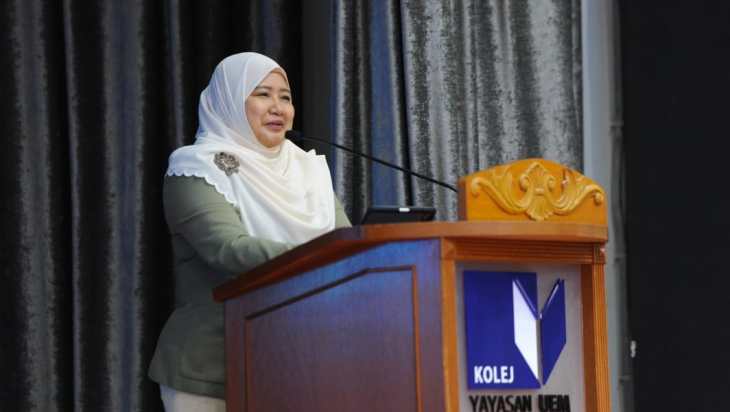
Speaking at the KYUEM Awards Day 2026, Siti Kamariah, who is managing director and trustee of Yayasan Hasanah, the impact-based foundation under Khazanah Nasional Berhad, reflected on the lessons that have guided her own journey. Looking back on her years as a student, she said education was never simply about preparing for university, but about developing the mindset to embrace change throughout life.
“Wherever life takes you – never stop learning,” she said.
Her message comes at a time when lifelong learning has become more important than ever. As artificial intelligence continues to evolve, technical knowledge can quickly become outdated, but the willingness to adapt, remain curious and continue learning will always be relevant.
Education for life
Reflecting on her student years, Siti Kamariah said the experiences that shaped her most were often the ones that took place outside the classroom. Living away from home for the first time taught her independence and resilience, while daily interactions with classmates helped prepare her for life beyond education.
“We were not merely preparing for university. We were preparing for life.”
She said those experiences equipped students with skills that extended far beyond academic achievement. In a world where careers continue to evolve, the ability to adapt and grow has become just as important as technical expertise.
The human advantage
While artificial intelligence can process information and perform increasingly complex tasks, Siti Kamariah believes the qualities that define great leaders are still developed through human experiences.
“The classroom teaches knowledge. The community teaches wisdom. The dining hall teaches inclusion. Student leadership teaches responsibility. And living together teaches empathy.”
She said these experiences taught students to understand different perspectives, work with people from diverse backgrounds and build meaningful relationships. They also nurtured qualities such as empathy, responsibility and trust—attributes that remain fundamental in every organisation and community.
The importance of trust, she said later in her address, extends beyond relationships. It is also central to how society invests in future generations.
“Every scholarship represents more than financial support. It represents trust. It represents potential. It represents a belief that investing in young people is one of the most powerful investments we can make.”
For Siti Kamariah, a scholarship is more than financial assistance. It is a statement of confidence in someone’s potential and a commitment to helping them grow. In an age increasingly shaped by technology, she suggested that this belief in people may become one of society’s greatest strengths.
Curiosity creates opportunity
One of the most memorable lessons from her education came from an unexpected place: learning Russian.
At the time, she admitted, it seemed like an unusual subject with little connection to her future career.
“The lesson was never really about Russian. It was about curiosity. About learning that the world is much larger than our immediate surroundings.”
Years later, she realised that the mindset behind that experience had prepared her to embrace opportunities she had never imagined, including working with the United Nations in New York.
“Years later, that mindset opened doors I could never have imagined.”
For Siti Kamariah, curiosity is not simply about acquiring knowledge. It is about remaining open to new perspectives, challenging assumptions and recognising opportunities that may not be immediately obvious. Those qualities, she believes, will continue to distinguish people even as artificial intelligence becomes increasingly sophisticated.
Investing in people
Today, Siti Kamariah helps create opportunities for others through Yayasan Hasanah, having once benefited from educational opportunities herself.
“Someone once invested in me. Now, in my role at Yayasan Hasanah, I have the privilege of helping create opportunities for the next generation.”
Her journey, she said, has reinforced the importance of giving others the same opportunities that shaped her own future. Whether through education, mentorship or scholarships, investing in people creates a ripple effect that extends well beyond individual success.
Success beyond titles
As students prepare to enter a world where artificial intelligence will continue to reshape the workplace, Siti Kamariah encouraged them to think differently about success.
“Ask instead: ‘What difference do I want to make?’ Because success is not measured by the titles we hold. It’s measured by the lives we touch.”
She urged graduates to pursue ambition without losing sight of the values that define strong leadership.
“Be ambitious, but remain humble. Be confident, but remain curious. Be successful, but remain grounded.”
Artificial intelligence will undoubtedly transform the future of work, but Siti Kamariah believes technology should be seen as a tool rather than a measure of success. The qualities that ultimately shape meaningful careers—curiosity, empathy, trust and a commitment to lifelong learning—remain deeply human, and they are the ones that will continue to matter most.
You Might Like